What Your Shipping Store Is Actually Worth -- And How to Prepare for a Sale
Most retail shipping store owners who are thinking about selling have a number in their head. That number is usually based on something they heard from another owner, a rough revenue multiple they read somewhere, or simply what they believe the years of work they have put into the business are worth. In most cases, that number is either higher than what the market will support -- or it is supportable, but the owner cannot yet prove it.
How Retail Shipping Stores Are Actually Valued
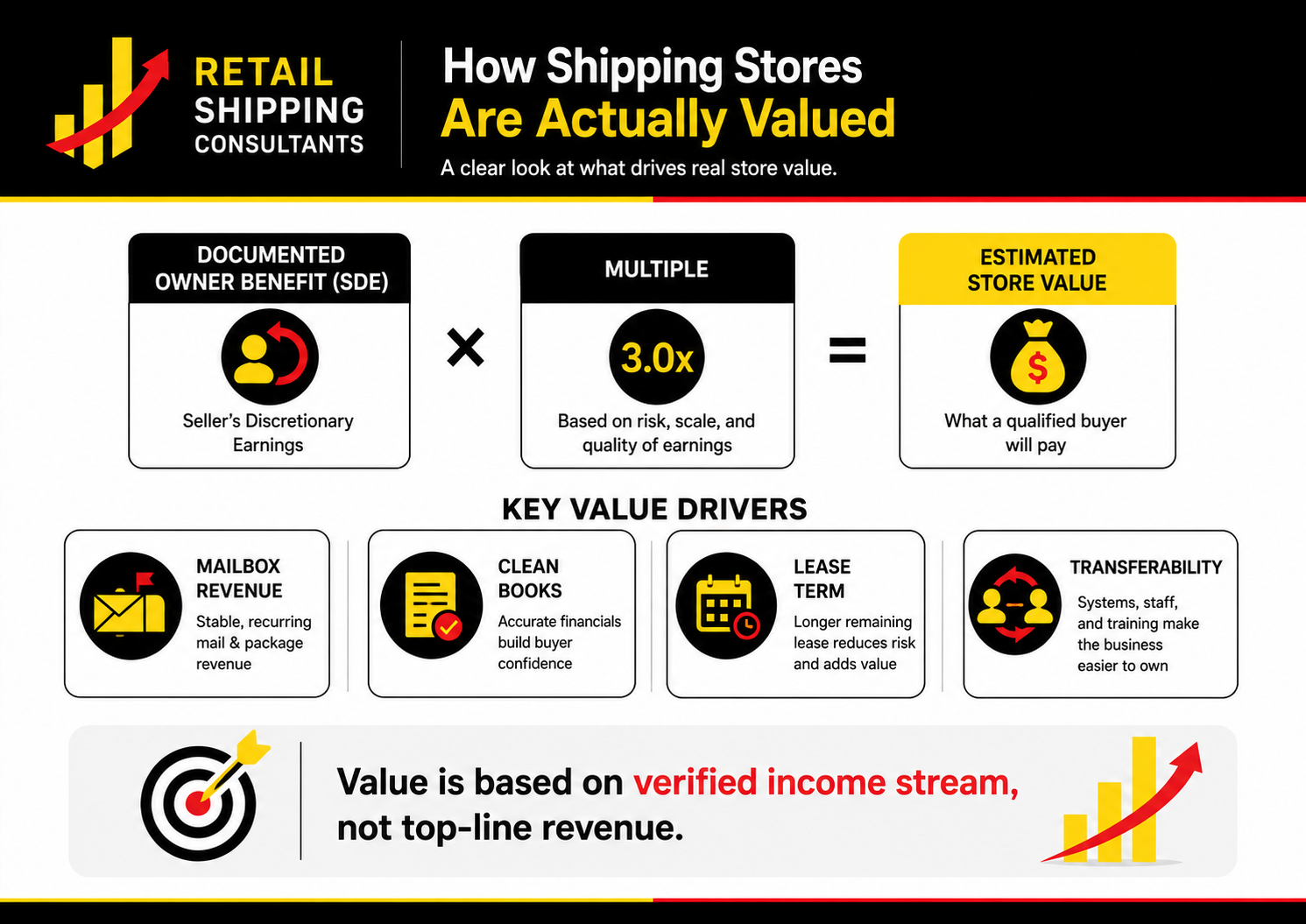
Independent retail shipping stores are generally valued using seller discretionary earnings (SDE), also called owner benefit -- the annual economic return to an owner who is actively working in the business. This is not gross revenue. It is not EBITDA in the traditional sense. It is the documented, verifiable income stream that a buyer is actually acquiring.
The SDE multiple applied to that number reflects the risk profile of the business: how stable and recurring the revenue is, how transferable the operation is, what the lease situation looks like, and how well-documented the financials are. Stores with strong mailbox revenue, clean books, and a long lease term command higher multiples. Stores with volatile revenue, undocumented cash income, and expiring leases command lower ones.
The most common mistake sellers make is confusing top-line revenue with the income stream a buyer is actually purchasing. A store generating $500,000 per year in gross revenue with $90,000 in documented owner benefit is not a $500,000 business.
Why Clean Books Are Non-Negotiable for Sellers
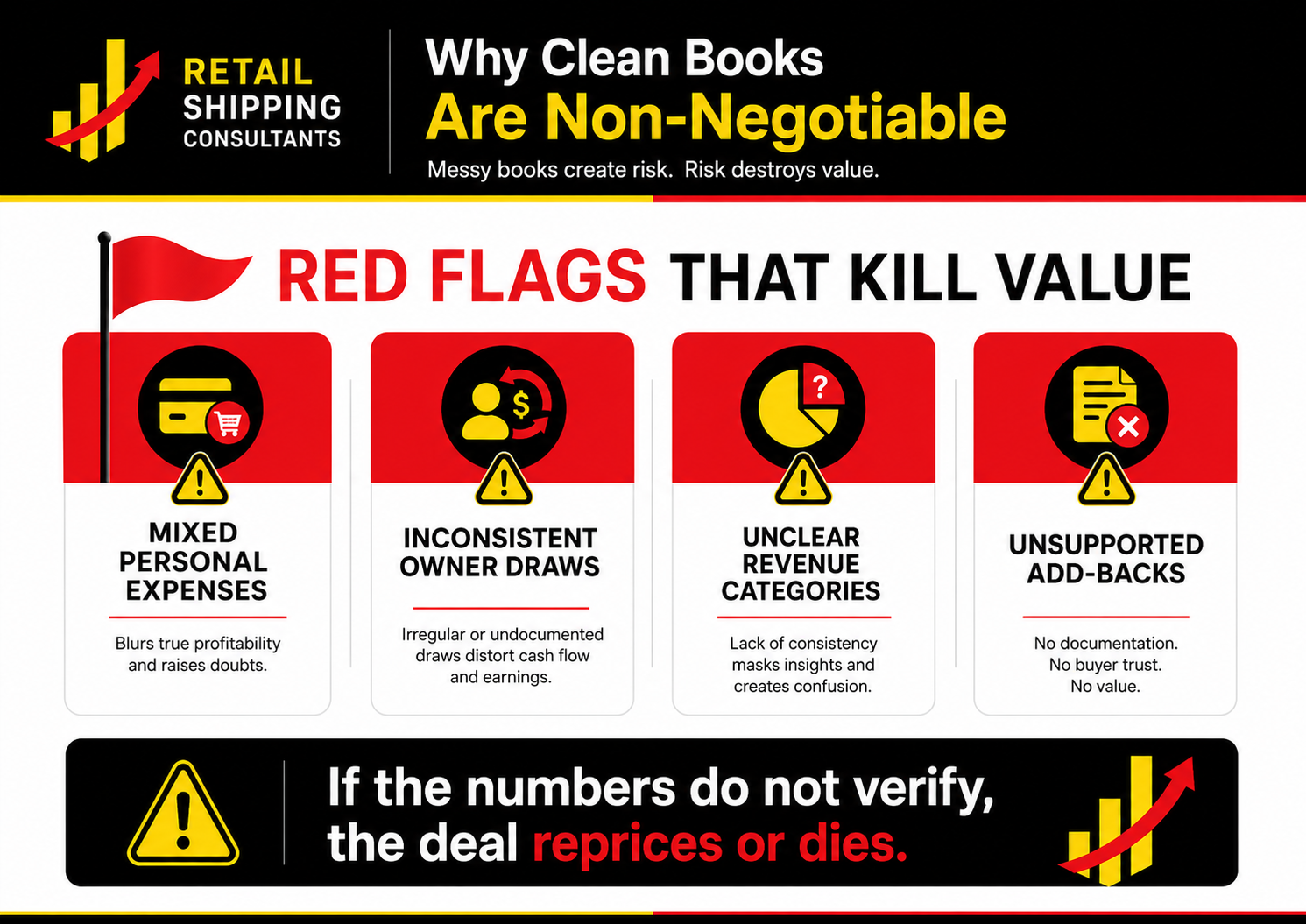
The single most common reason a shipping store sale stalls, reprices downward at the last minute, or falls apart entirely is that the seller cannot provide financial documentation that supports the asking price. This is not always about dishonesty. It is usually about how most independent owners run their books.
Many store owners mix personal expenses into the business, take inconsistent draws, categorize revenue in ways that made sense for tax purposes but make it difficult to reconstruct actual profitability, and have years of records that require significant restatement before a buyer or a buyer's accountant can verify them.
Buyers who make it past an initial letter of intent will hire someone to look at the numbers. If what that person finds does not match what was represented, the deal reprices or dies.
The Six to Twelve Month Pre-Sale Window
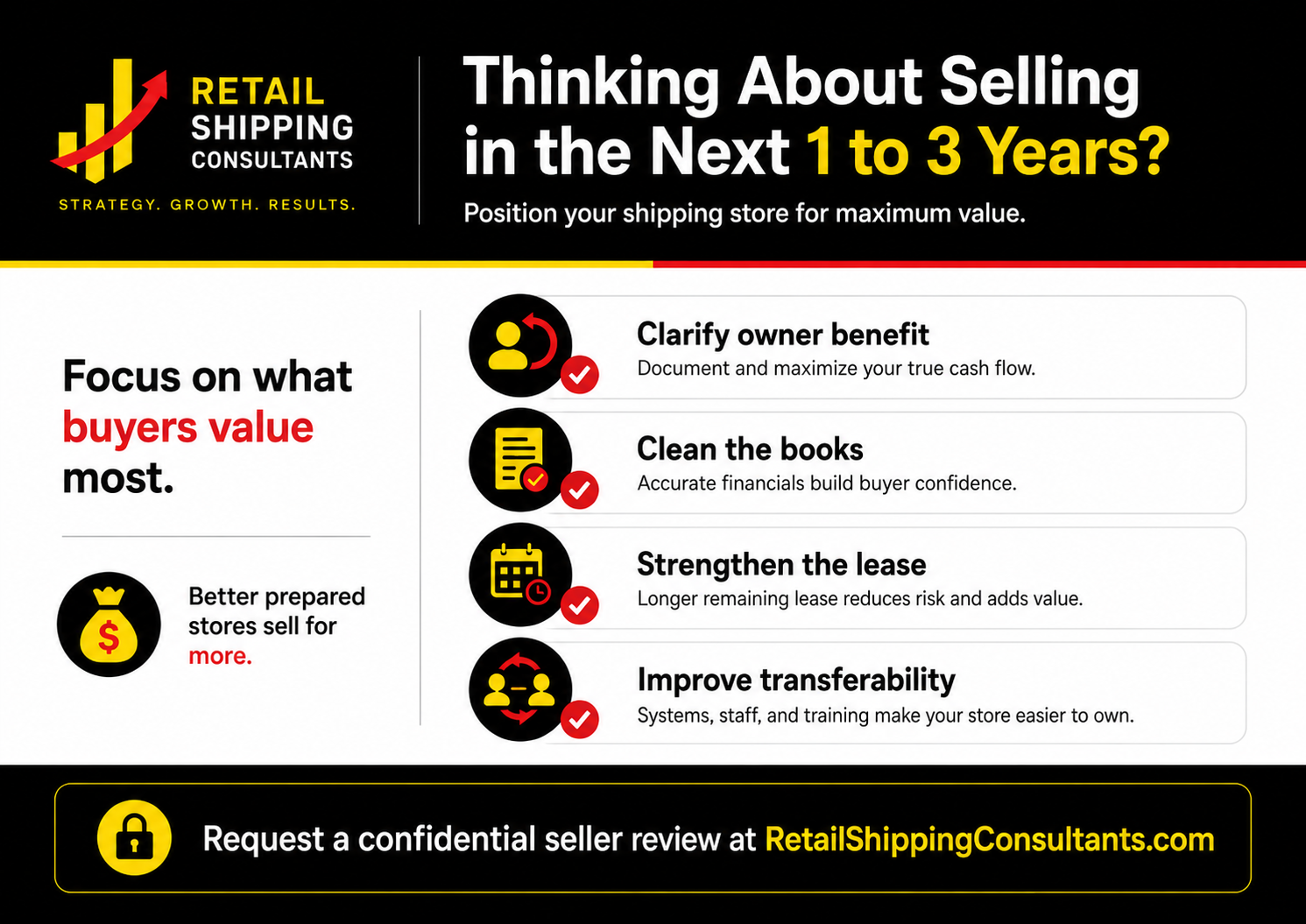
Owners who achieve the best outcomes on store sales typically start preparing 6 to 12 months before they intend to go to market. That preparation involves:
- Restating financials to accurately reflect true owner benefit with documented add-backs
- Cleaning up bookkeeping to meet the categorization standards buyers expect
- Ensuring all CMRA compliance documentation is current and complete
- Reviewing the lease situation and, where necessary, negotiating an extension before listing
- Assessing the mailbox customer base and addressing high-churn risk factors
- Documenting operational processes so the business is demonstrably transferable
Sellers who do this work command stronger multiples and close faster. Sellers who go to market without it spend months in due diligence, lose deals, and often end up accepting lower prices than their store genuinely justifies.
Frequently Asked Questions
What is a realistic timeline for selling an independent retail shipping store?
From listing to close, most independently operated retail shipping store transactions take 4 to 9 months. Sellers who have done pre-sale preparation tend to close faster and with fewer price adjustments during due diligence.
What adds the most value to a shipping store before a sale?
Documented, recurring mailbox revenue is the single largest value driver. After that: clean and well-categorized financial records, a stable lease with favorable terms, and documented operational procedures that make the business transferable without the current owner.
Should I use a business broker to sell my shipping store?
A broker can help with buyer sourcing and deal management, but they cannot prepare your financials or clean up compliance gaps. That preparation work needs to happen before you engage a broker, not after. --- If you are considering selling your store in the next one to three years, start the preparation now. Request a confidential seller review at RetailShippingConsultants.com.
Sellers who do this work command stronger multiples and close faster. Sellers who go to market without it spend months in due diligence, lose deals, and often end up accepting lower prices than their store genuinely justifies.