How to Evaluate a Shipping Store Before You Buy: The Due Diligence Checklist
Buying a retail shipping store is not like buying a franchise. There is no standardized disclosure document, no corporate backing, and no established playbook for how the previous owner ran the business. The financial story a seller presents is almost always incomplete -- not necessarily because they are being dishonest, but because most independent store owners track revenue more carefully than they track real profitability or operational risk.
Doing proper due diligence before committing to a purchase requires knowing what questions to ask and what documents to actually request.
Start With Owner Benefit, Not Revenue
The most common mistake first-time buyers make is evaluating a store based on gross revenue or even gross profit without calculating true owner benefit. Owner benefit is the annual economic return to an owner who is actively working in the business -- gross revenue minus all operating expenses, plus any personal expenses the current owner has been running through the business.
When a seller says the store "does $400,000 a year," that number needs to translate into a documented owner benefit figure before it can support any asking price. A store with $400,000 in gross revenue and $80,000 in owner benefit is valued very differently than one with $400,000 in gross revenue and $140,000 in owner benefit -- and both are possible.
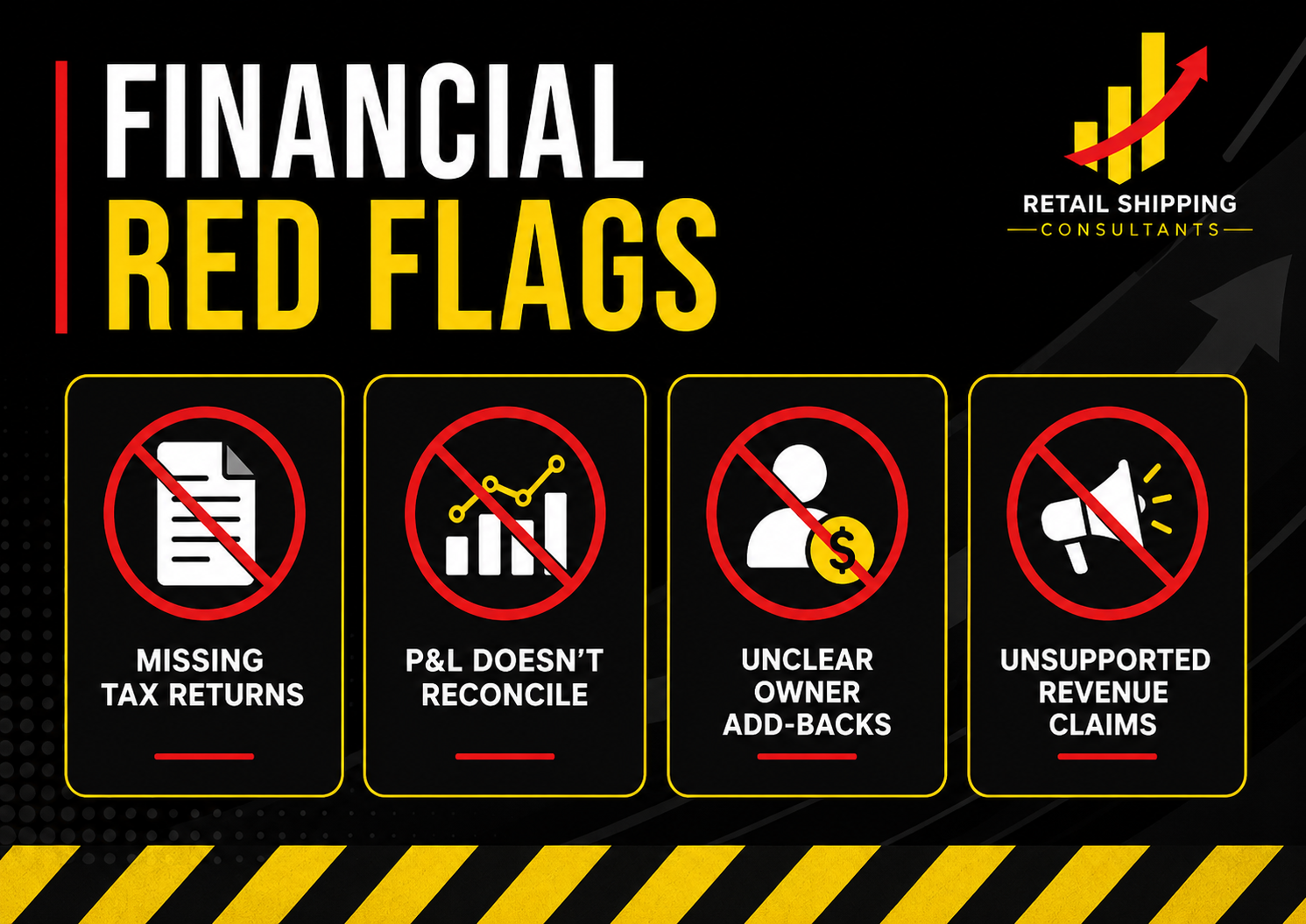
Ask for three years of business tax returns and monthly P&L statements. If the seller cannot provide them, or if what they provide cannot be reconciled to the revenue number they are claiming, treat that as a significant red flag.
Mailbox Revenue: Stability Matters More Than Volume
Mailbox revenue is often the most durable and highest-margin revenue in a retail shipping store. But not all mailbox revenue is equally stable. Key questions to ask about a store's mailbox customer base include:
- What percentage of mailbox customers are on month-to-month versus annual contracts?
- What is the average tenure of the current mailbox customer base?
- How many mailbox customers are businesses versus individuals?
- What is the typical churn rate -- how many mailboxes are lost and replaced annually?
A store with 150 mailboxes dominated by long-term business customers on annual contracts is a very different acquisition than a store with 150 mailboxes mostly occupied by short-term individual customers. The second store carries significantly higher revenue volatility.
The Lease: The Most Overlooked Risk
Many retail shipping store buyers discover after signing a letter of intent -- or after closing -- that the store lease cannot actually transfer to them without landlord approval. Some leases have change-of-control clauses that give the landlord the right to renegotiate terms or terminate the lease entirely when the business changes hands.
Before making any commitment on a store purchase, review the lease carefully and confirm in writing with the landlord that an assignment to a new owner is permissible. Also confirm the remaining lease term. Purchasing a store with 14 months left on the lease is a very different risk profile than purchasing one with five years remaining.
Frequently Asked Questions
What financial documents should I request when evaluating a store purchase?
At minimum: three years of business tax returns, 12 to 24 months of P&L statements, the current lease agreement, a list of active mailbox customers with contract types and tenure, and recent carrier statements or invoices.
How are retail shipping stores typically valued?
Most independent retail shipping stores are valued using a multiple of seller discretionary earnings (SDE), which is functionally equivalent to owner benefit. Multiples vary, but stores with stable mailbox revenue and clean financials typically command higher multiples than stores reliant primarily on carrier shipping volume.
What are the biggest red flags in a shipping store acquisition?
Books that cannot be verified independently, a lease that is expiring or does not transfer cleanly, a mailbox customer base dominated by month-to-month customers, and heavy revenue concentration in a single service category or customer segment. --- Before you commit to buying a shipping store, get an independent review of the financials and operational details. Request buyer guidance at RetailShippingConsultants.com.