The Merchant Processing Fees Quietly Eating Your Shipping Store Profit
Merchant processing is a cost that most retail shipping store owners set up once and then stop thinking about. That is exactly the problem. Processing rates are not static -- they drift upward through interchange adjustments, processor markup increases, and fee structures that grow more expensive as transaction patterns change. For a store doing meaningful card volume, that drift adds up.
How Merchant Processing Costs Work for a Retail Store
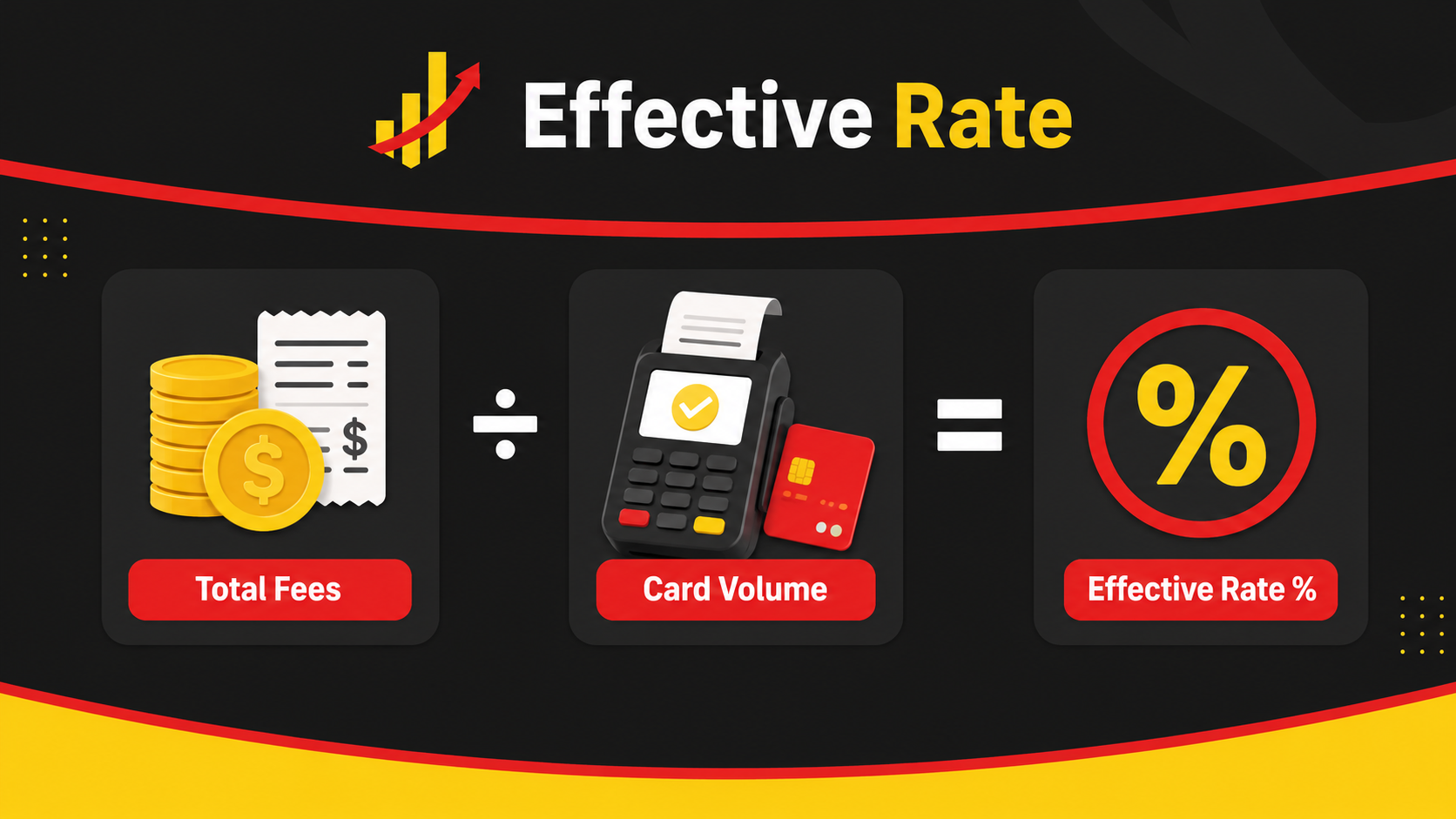
Every card transaction a shipping store processes has two primary cost components: interchange fees (set by the card networks and non-negotiable) and processor markup (set by your processor and very much negotiable). The effective rate your store pays is the combination of both.
Effective rates for retail businesses typically fall between 2.0 and 2.8 percent of total card volume for well-managed accounts. Stores paying 3.0 percent or higher on their effective rate are likely carrying unnecessary cost -- often because the processor markup has increased, because the store is on a pricing model that is no longer competitive, or because non-qualifying transaction surcharges have accumulated without review.
On $50,000 in monthly card volume, the difference between a 2.4 percent effective rate and a 3.0 percent effective rate is $300 per month -- $3,600 per year of recoverable margin.
The Four Most Common Processing Cost Leaks
Outdated pricing model. Many independent stores are still on tiered pricing structures that were standard a decade ago but have been largely replaced by interchange-plus pricing for businesses that have the volume to negotiate it. Tiered pricing bundles interchange and markup in ways that make it difficult to assess true cost.
Non-qualifying transaction surcharges. Business credit cards, rewards cards, and certain international cards often carry higher interchange categories. Processors may assess additional surcharges for these transactions that accumulate invisibly on the monthly statement.
PCI non-compliance fees. Stores that have not completed their annual PCI DSS compliance questionnaire are often assessed monthly non-compliance fees that appear as a line item on the statement but are easy to miss in a busy month.
Minimum processing fees. Stores with lower-volume months may be subject to minimum processing fees that effectively raise their effective rate during slower periods.
What a Processing Audit Involves
A structured review of merchant processing for a retail shipping store typically involves pulling 12 months of processing statements and calculating the true effective rate month by month. This baseline reveals whether rates have been drifting, whether non-qualifying surcharges are accumulating, and whether the current processor and pricing model remain competitive given the store's transaction volume and mix.
For stores that are significantly above market rates, the audit findings become the basis for a renegotiation conversation with the current processor -- or the foundation for a competitive bid process if the current processor is unwilling to adjust.
Frequently Asked Questions
How do I know if my merchant processing rate is too high?
Calculate your effective rate by dividing total processing fees by total card volume for the same month. If your effective rate is consistently above 2.8 percent for a retail business doing meaningful volume, a review is warranted.
Can I negotiate my processing rate without switching processors?
Yes. Many processors will renegotiate rates for accounts that have been active for 12 or more months and can demonstrate consistent volume. A competitive bid from another processor significantly strengthens that conversation.
What is interchange-plus pricing and why does it matter?
Interchange-plus pricing separates the non-negotiable interchange fee from the processor markup, making it transparent and auditable. Tiered pricing bundles both, which makes it difficult to assess whether you are paying a fair markup. Interchange-plus is generally the more favorable structure for businesses with consistent card volume. --- If you have not reviewed your merchant processing costs in the past 12 months, it is worth taking an hour to calculate your effective rate. Request a processing review as part of a full operational assessment at RetailShippingConsultants.com.
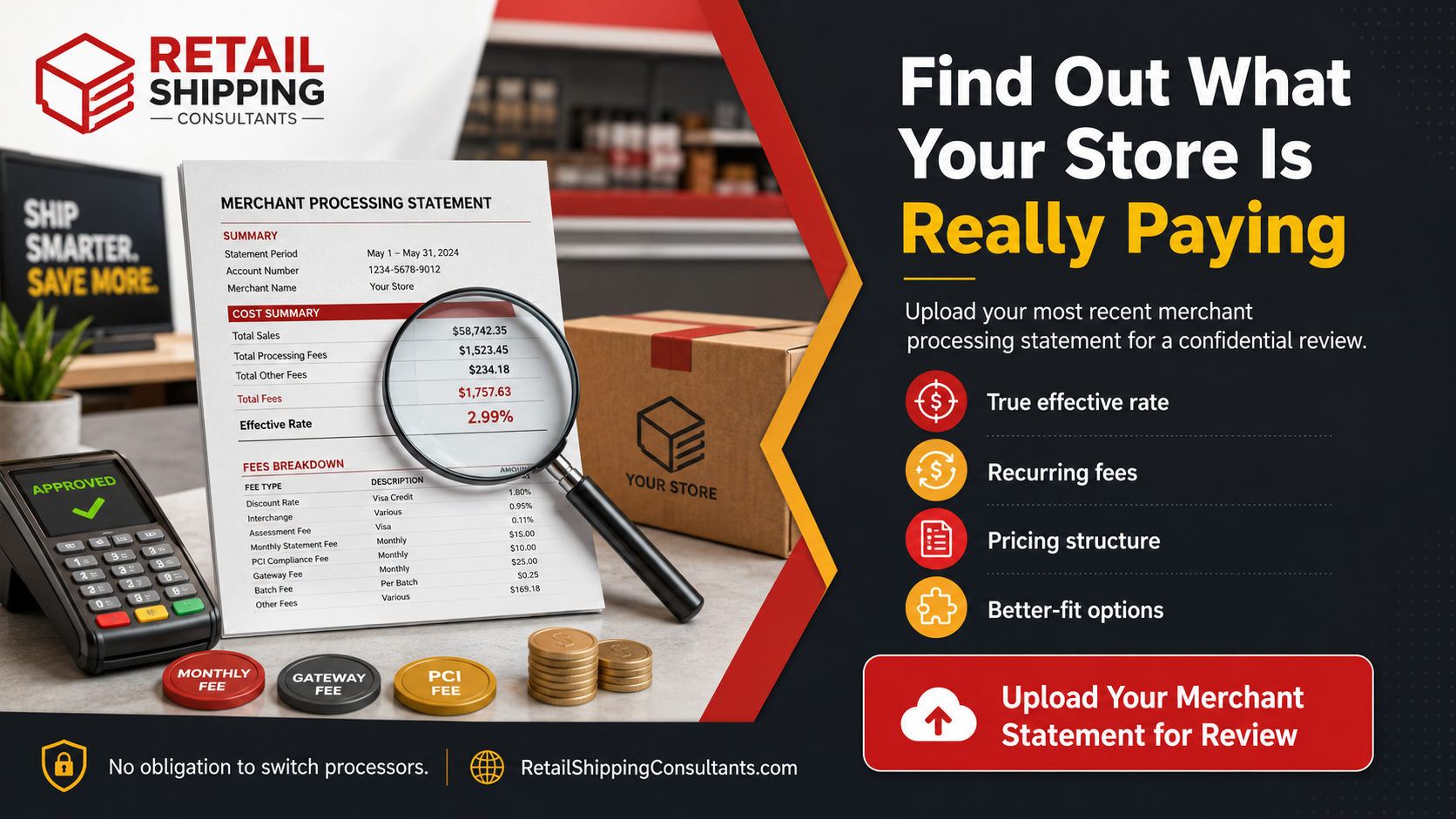
Find Out What Your Store Is Really Paying
Small processing charges can quietly become thousands of dollars in unnecessary annual expenses.
Upload your most recent merchant processing statement for a confidential review from Shipping Store Consultants. We will help you:
Calculate your true effective processing rate
Identify recurring fees and unnecessary charges
Review your current pricing structure
Explore options that may better fit your store